

Silence = Death
A Chart, A Crisis and the Queer Lives Who Changed the World

Grief has a shape.
Or at least, that was the radical claim made in 1969, when psychiatrist Elisabeth Kübler‑Ross published On Death and Dying and introduced what would become one of the most enduring psychological frameworks of the modern era: the five stages of grief.
Kübler‑Ross originally observed these stages in patients who were dying, not in those left behind. But the model escaped the hospital room and entered the bloodstream of culture. It became a language for loss, a way to narrate the unspeakable, a structure for the moments when structure collapses.
The stages are simple:
Denial — the mind as shield, a kind of psychological protection
Anger — the heat that rises when reality lands, waking up the desire to fight
Bargaining — the desperate attempt to negotiate with the inevitable
Depression — the weight of what cannot be undone
Acceptance — not peace, but recognition
Five movements.
Five emotional climates.
Five ways the psyche tries to survive the inescapable fact that every person living must one day face.
We are all going to die.
And yet, the unthinkable is rarely a single moment.
Sometimes it arrives slowly, quietly, almost bureaucratically. Sometimes the event that changes everything doesn’t look like an event at all. It looks like a paragraph. A timestamp. A few lines of text that no one realizes will alter the course of a generation.
Before we get to that moment, we need the architecture of grief itself. Because the story that follows doesn’t just fit the five stages. It inhabits them. It embodies them. It moves through them with a precision that feels less like psychology and more like fate.
Something began on a particular day.
Something small, clinical, almost forgettable.
A story of denial, anger, bargaining, depression, and acceptance.
A story written in the language of loss before anyone knew they were losing anything.
Grief feels like chaos as it moves through us in patterns. That was the insight that reshaped modern psychology in the late twentieth century, when Elisabeth Kübler Ross proposed that the human response to loss follows a recognizable emotional architecture. Not a straight line, not a prescription, but a rhythm. A sequence. A way the psyche metabolizes the unbearable. A geometry, perhaps.
Those stages, Denial, Anger, Bargaining, Depression, and Acceptance, have been debated, revised, misapplied, and mythologized. They endure because they offer something rare: a shape for the shapeless.
What is less discussed is how these stages can describe not only individual grief, but collective grief. The emotional weather system that forms when an entire community is thrust into loss at the same time. When the wound is not personal but cultural. When the shockwave moves through neighborhoods, networks, identities, and generations.
And sometimes, that collective grief has a beginning.
A moment so quiet, so bureaucratic, so unassuming that no one alive at the time could have guessed what it would become.
The chart for this moment is a map of the five stages of grief before the grief had a name.
A Gemini Sun and Mars in the house of community, whispering the first tremors of Denial.
A Cancer Moon, Mercury, and Venus buried in the twelfth house, marking the hidden suffering and the rising Anger of a community left unprotected.
A Scorpio IC with Lilith and Uranus, the underworld root system of Bargaining, secrecy, and survival.
A Libra stellium in the third house, the architecture of Depression, loss woven throughout relationships and daily life.
And at the top of the chart, a Taurus Midheaven with Chiron, the wound made public, the emergence of Acceptance as activism, embodiment, visibility, and endurance.
Five stages.
Five houses.
Five emotions written into the sky.
All before anyone knew what this was, or what was still coming.
Encoded within this planetary geometry, the five stages feel like prophecy.
The moment encoded in this chart was not a protest, a riot, a speech, or a tragedy. It was a publication date.
June 5, 1981.
Atlanta, Georgia.
A routine issue of the Centers for Disease Control’s Morbidity and Mortality Weekly Report.
A brief note describing five cases of Pneumocystis pneumonia in previously healthy young men. No headline. No warning. No sense of what was unfolding.
This was the first official documentation of the disease that would later be known as AIDS.
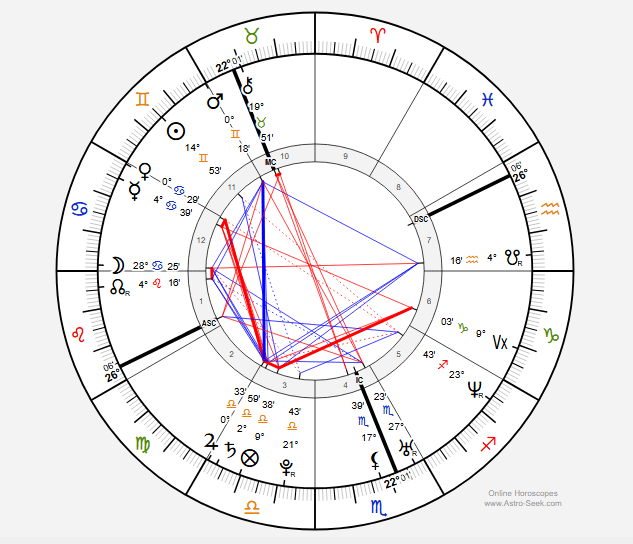
THE HISTORY: The Quiet Beginning of a Catastrophe
This chart’s geometry belonged to a publication date, not a headline.
June 5, 1981.
Atlanta, Georgia.
On that day, the Centers for Disease Control released a short clinical notice in the Morbidity and Mortality Weekly Report describing five cases of Pneumocystis carinii pneumonia in previously healthy young men in Los Angeles. All five were described as homosexual men, and two had already died.
The report was written by clinicians in Los Angeles and an Epidemic Intelligence Service officer stationed at the Los Angeles County Department of Public Health. It was submitted in early May, reviewed by CDC experts, and published without fanfare.
Nothing in the tone of the report suggested the scale of what was coming.
It was clinical, cautious, small.
But the editorial note hinted at something uncanny: the cases suggested a “cellular-immune dysfunction related to a common exposure.”
In hindsight, this was the first official recognition of what would become AIDS.
At the time, no one understood the implications.
Not the clinicians.
Not the CDC.
Not the public.
Not even the men who were already sick.
The early months that followed were marked by confusion and fear. More cases appeared in Los Angeles, then New York, then San Francisco. By the end of 1981, the CDC had received reports of 270 cases of severe immune deficiency in gay men, and 121 of them had died.
The pattern was unmistakable, but the cause was not.
Theories proliferated.
Speculation filled the vacuum left by silence.
The government did not respond.
The press barely noticed.
By 1987, more than 50,000 cases had been reported in the United States. By 1989, the number had doubled to 100,000, and by the end of 1991, the cumulative total had reached 206,392 cases and 133,232 deaths.
The epidemic was no longer emerging.
It was everywhere.
The early years were defined by:
medical uncertainty
institutional neglect
stigma and moral panic
the collapse of entire social networks
the birth of grassroots activism
The CDC’s first report, that quiet paragraph on June 5, became the first marker of a crisis that would soon reshape an entire generation. It is now recognized as the first published description of the disease that would later be named AIDS.
But at the time, it was just a few lines in a government bulletin.
A beginning disguised as a footnote.
To understand how the crisis unfolded emotionally, in individuals, in communities, and in the culture itself, we return now to the chart and the five stages written into it.
DENIAL
Gemini Sun and Mars in the Eleventh House, and the First Fracture in Meaning
Denial begins with Gemini because Gemini gathers information faster than it can understand it. In this chart, both the Sun and Mars sit in Gemini in the eleventh house, the house of community, networks, and collective identity. The first stage of grief is the hum of rumors, the circulation of half-formed explanations, the restless movement of questions without answers. The Sun in Gemini creates curiosity without comprehension, while Mars at zero degrees Gemini creates motion without direction. The moment is alive with talk, but the talk does not yet cohere into meaning.
The denial in this chart is strengthened by Mars forming a trine to Jupiter in Libra. This trine creates a smooth and confident surface over the emerging crisis. Jupiter in the third house expands communication, but it does not guarantee accuracy. It spreads reassurance more easily than truth. It encourages the belief that the first cases are isolated, that the pattern is coincidence, that there is no reason to worry. This is the astrology of early dismissal, when the community hears the first whispers but does not yet believe they point to anything larger.
Neptune in Sagittarius forms a trine to the Leo Ascendant, softening the edges of perception and creating a haze around the moment. This is the aspect that makes the crisis feel unreal or exaggerated. It encourages the hope that the strange new illness is temporary, or that it will resolve on its own, or that it is not as serious as it seems. Neptune’s trine to the Ascendant creates a veil over the collective field of vision. The truth is present, but it does not land.
Meanwhile, the Cancer Moon in the twelfth house forms a trine to Uranus in Scorpio in the fourth house. This creates an emotional tremor beneath the surface, a sense of unease that has not yet reached consciousness. The Moon feels what the mind cannot articulate. Uranus signals disruption, but the twelfth house buries it. The result is a quiet intuition that something is wrong, paired with an inability to name what that something is. The body knows before the mind does, but the knowledge remains submerged.
Denial in this chart is not ignorance. It is fragmentation. It is a moment when the community senses something, the institutions sense something, the clinicians sense something, and the sky itself signals something, yet no one can assemble the pieces. The aspects describe a world where the truth is everywhere and nowhere, scattered across houses, whispered through angles, present but not yet recognized.
Denial is the first stage because the story begins in fragments, and no one can yet see the shape they form.
ANGER
Cancer Moon, Mercury, and Venus in the Twelfth House, and the Rising Heat of a Community Left Unprotected
Anger begins in the twelfth house: the place where suffering is hidden, where institutions fail, where the collective unconscious absorbs what the conscious mind cannot yet face. In this chart, the Moon, Mercury, and Venus are all in Cancer in the twelfth house, creating an emotional landscape defined by vulnerability, secrecy, and the quiet accumulation of fear. Cancer feels everything. The twelfth house hides everything. Together they create a pressure that has nowhere to go. The anger that emerges from this configuration is not loud at first. It is internal. It is private. It is the anger of people who know something is wrong but cannot yet name it, the anger of a community that senses danger while the world around them insists that nothing is happening.
The Moon in Cancer absorbs the suffering of others. It feels the losses before they are spoken aloud. In the twelfth house, the Moon becomes a container for collective grief that has not yet been acknowledged. Mercury in Cancer tries to speak, but the twelfth house muffles its voice. Words dissolve before they reach the surface. Stories circulate quietly, often in whispers, often in fear. Venus in Cancer tries to protect the people it loves, but the twelfth house isolates it. The result is a rising emotional tide that cannot yet find expression in the public world. Anger grows in the gap between what is felt and what is allowed to be said.
The South Node in Aquarius forms a trine to Mars in Gemini, and this adds a historical charge to the anger. It evokes memories of past neglect, past abandonment, past moments when queer communities were left to fend for themselves. This is anger shaped by history, anger that recognizes a pattern even before the pattern is consciously understood. The South Node also forms a trine to Saturn in Libra, which brings the weight of institutional failure into the emotional field. Saturn represents systems, structures, and authority. In trine to the South Node, it evokes the long memory of systemic disregard. The anger here is not only emotional. It is political. It is the anger of people who have been dismissed before and who feel, even in the earliest days, that they are being dismissed again.
This chart reflects the reality that the government did not acknowledge the crisis as it unfolded. The twelfth house Cancer stellium describes suffering that is kept out of sight, and Saturn’s involvement shows the slow and reluctant movement of institutions that should have acted sooner. The anger that rises from this configuration is the anger of communities watching their friends get sick while officials remain silent. It is the anger of people who are grieving in private because their grief is not yet recognized as real. It is the anger of a population that understands, even in the earliest days, that they are being left to face a catastrophe without support.
Saturn forms a sextile to the North Node in Leo, and this adds a slow and reluctant recognition that something must be confronted. The sextile does not create immediate action. It creates pressure. It creates the sense that responsibility is building, that the truth is approaching, that the crisis will eventually demand a response. But in the early stage of anger, this aspect feels like frustration. It feels like the world is moving too slowly, like institutions are refusing to see what is already obvious to those who are suffering. The sextile describes the anger that arises when the future is calling and no one in power is listening.
The twelfth house Cancer stellium gives this stage its emotional depth. The anger is not explosive. It is tidal. It rises quietly, steadily, and with increasing force. It is the anger of caretakers who cannot protect the people they love. It is the anger of communities who see their friends getting sick while the world looks away. It is the anger of people who are grieving in private because their grief is not yet recognized as real, because the greater society did not yet acknowledge gay people as human.
It is also the anger of people whose relationships were forced into secrecy. Partners were not allowed to visit the men they loved in the hospital, even when families refused to come. Lovers were turned away at the door while parents who had disowned their sons were given full authority over their care. Doctors refused to touch patients. Nurses left food trays outside the door. Hospital staff abandoned rooms rather than offer comfort. Patients were refused at the entrances of hospitals. The dehumanization was so profound that it is almost impossible to comprehend. People were blamed for their illness, blamed for their desire, blamed for the simple fact of who they loved and how they loved.
This is the anger that breaks something open. It is the anger that makes secrecy unbearable. It is the anger that forces people to step out of the shadows and insist on being seen. For many, this was the moment when the closet stopped being survivable. The silence that had once been protective became a threat. The anger in this chart marks the beginning of the end of hiding, the moment when private suffering demanded public recognition.
Anger in this chart is not rage for its own sake. It is the emotional awakening that follows denial. It is the moment when the truth becomes too heavy to carry alone, when the heart refuses to remain silent, when the community realizes that invisibility is no longer an option, because invisibility equals death. It is the anger of a people left unprotected, and it is the anger that will eventually transform into activism, solidarity, and the unrelenting fight to be seen.
BARGAINING
The Scorpio IC, Lilith, Uranus, and the Underworld Logic of Survival
Bargaining begins at the root of the chart, in Scorpio on the IC, the point that describes the deepest interior of a moment. Scorpio does not negotiate in the open. It negotiates in the dark. It negotiates with fear, with desire, with secrecy, and with the instinct to survive at any cost. The IC is the foundation of the chart, and in Scorpio it creates an emotional landscape shaped by hidden motives, private calculations, and the quiet attempt to control what cannot be controlled. This is the stage where people begin to ask impossible questions. What if I avoid this bar? What if I stop seeing this person? What if I change my habits? What if I pray harder? What if I am careful? What if I am lucky? Bargaining is the mind trying to make a deal with fate.
Lilith sits at the root of this chart, and her presence intensifies the sense of taboo. Lilith represents the parts of life that society refuses to acknowledge, the desires that are punished, the identities that are pushed into the shadows. In the early years of the AIDS crisis, queer love itself was treated as a moral failing. Lilith on the IC describes the internalization of that judgment, the bargaining that arises when people are told that their love is dangerous, that their bodies are suspect, that their desire is the cause of their suffering. It is the bargaining of people who have been taught to hide the most intimate parts of themselves, and who now face a crisis that seems to punish them for the very things they were forced to conceal.
Uranus in Scorpio adds a layer of shock and unpredictability. Uranus disrupts whatever it touches, and in Scorpio it disrupts the hidden world. It brings sudden revelations, sudden losses, sudden ruptures in the fabric of daily life. In the early years of the epidemic, people watched their friends become sick without warning. They watched healthy bodies collapse in a matter of weeks. They watched patterns that made no sense. Uranus in Scorpio describes the frantic attempt to understand the unpredictable, to find logic in chaos, to identify rules where none exist. It is the bargaining that arises when the world becomes unstable and the mind tries to impose order on the disorder.
The Vertex in Capricorn forms a square to Fortuna in Libra, and this creates a tension between fate and chance. The Vertex is the point of fated encounters, the moments that feel destined, the events that alter the course of a life. Fortuna represents luck, randomness, and the unpredictable turning of the wheel. The square between them describes the psychological contortions of bargaining. If I do this, maybe I will be safe. If I avoid that, maybe I will be spared. If I change my behavior, maybe fate will change its mind. The square creates a sense of conflict between what feels inevitable and what feels negotiable. It is the bargaining that arises when people try to outmaneuver destiny.
Neptune in Sagittarius forms a sextile to Pluto in Libra, and this aspect deepens the underworld atmosphere of this stage. Neptune dissolves boundaries, while Pluto exposes what lies beneath them. Together they create a fog of uncertainty, a sense that the crisis is both everywhere and nowhere, visible and invisible, understood and unknowable. This is the geometry of magical thinking, of desperate hope, of the belief that meaning can be found in the incomprehensible. It is the bargaining that arises when people try to make sense of a crisis that defies logic, when they search for patterns in the dark, when they cling to any explanation that offers even a small sense of control.
Bargaining in this chart is not naïve. It is primal. It is the instinct to survive in a world that has become hostile. It is the attempt to negotiate with a crisis that offers no terms. It is the quiet calculation of risk, the whispered promises to oneself, the private rituals of protection. It is the bargaining of people who have been forced into secrecy and who now face a threat that thrives in the shadows. It is the bargaining of a community trying to find safety in a world that refuses to see them.
Bargaining is the third stage because the truth has become undeniable, and the heart begins to search for any path that might soften what is coming.
DEPRESSION
The Libra Stellium in the Third House, and the Collapse of the Relational World
Depression begins when the losses become impossible to count. In this chart, the third house is crowded with planets in Libra, a sign that governs relationships, partnerships, and the delicate balance between self and other. The third house describes the people who populate daily life, the friends who stop by unannounced, the neighbors who wave from across the street, the chosen family who fill the spaces that biological families have abandoned. When Libra fills this house, life is built from connection. When a crisis tears through those connections, the grief is not theoretical. It is relational. It is the slow unraveling of the social fabric that holds a community together.
Pluto in Libra sits at the heart of this collapse. Pluto exposes what is hidden and destroys what can no longer survive. In Libra, Pluto reveals the fragility of relationships under pressure. It reveals the ways in which love becomes a battleground, not because the love is weak, but because the world around it is hostile. During the worst years of the AIDS crisis, entire networks of friends disappeared in a matter of months. People attended funerals weekly. They watched their social circles shrink until they were standing almost alone. Pluto in Libra describes the grief of losing not just individuals, but the entire relational world that once made life feel whole.
Jupiter in Libra expands whatever it touches, and in the third house it expands the awareness of loss. It magnifies the absence. It magnifies the silence. It magnifies the empty chairs at dinner tables and the unanswered phone calls and the missing faces in familiar places. Jupiter is often associated with hope, but in this context it enlarges the emotional weight of what has been taken. It makes the grief impossible to ignore. It makes the losses feel endless.
The third house governs communication, and during this stage communication itself becomes a source of pain. Phone calls bring bad news. Letters carry updates about hospitalizations. Conversations revolve around illness, caretaking, and the logistics of dying. The daily rhythm of life becomes saturated with sorrow. Depression in this chart is not a single emotion. It is an atmosphere. It is the emotional climate of a community living inside a storm that does not pass.
Libra seeks balance, but in that moment balance was impossible. The scales tip toward loss again and again. The desire for harmony becomes a source of grief, because harmony cannot be restored. The relationships that once offered support were disappearing. The people who once held each other up are now the ones being carried. Depression arises when the heart understands that the world it knew is gone, and that no amount of bargaining or rage can bring it back.
This stage is not weakness. It is recognition. It is the moment when the truth settles into the body. It is the moment when the grief becomes too heavy to outrun. It is the moment when the community realizes that the crisis is not temporary, that the losses will continue, that the world has changed in ways that cannot be undone. Depression in this chart is the emotional weight of a generation watching its own future collapse.
Depression is the fourth stage because the heart has finally absorbed the full magnitude of what has been lost.
ACCEPTANCE
The Taurus Midheaven with Chiron, and the Emergence of Visibility, Activism, and Collective Identity
Acceptance in this chart does not mean peace. It means recognition. It means stepping into the truth that has been unfolding since the first whisper of illness, the first loss, the first unanswered question. The Taurus Midheaven anchors this stage. Taurus is steady, embodied, and enduring. The Midheaven is the public face of a moment, the place where private experience becomes collective identity. When Chiron sits at the top of the chart, the wound becomes visible. The suffering that was hidden in the twelfth house, whispered through the third house, and carried in the heart of the community now rises into public view.
Chiron on the Midheaven describes a wound that cannot be ignored. It is the moment when the crisis becomes undeniable, not only to those who are living inside it, but to the world that has tried to look away. It is the emergence of activism, the formation of organizations, the creation of networks of care that operate in the open rather than in the shadows. It is the moment when grief becomes action. It is the moment when the community insists on being seen.
Taurus brings a grounded quality to this stage. It is the sign that builds, sustains, and endures. Acceptance here is not resignation. It is commitment. It is the creation of systems of support, the establishment of clinics, the development of safer sex education, the formation of activist groups that refused to let the world forget what was happening. Taurus is the slow and steady work of survival. It is the insistence that life continues, even in the face of unimaginable loss.
Chiron at the Midheaven also describes the transformation of the wound into a source of collective identity. The crisis forces a new kind of visibility. People come out to protect their partners. They come out to advocate for their friends. They come out because secrecy has become dangerous. The anger of the previous stage becomes the fuel for public action. Acceptance is the moment when the community steps into the light, not because the grief has ended, but because the grief demands to be witnessed.
This stage is shaped by the larger cosmic backdrop of the era. The chart sits in the shadow of the applying Great Conjunction of Jupiter and Saturn, a cycle that marks the restructuring of societies and the turning of historical eras. The early 1980s carried the weight of that conjunction, just as the early days of the COVID pandemic carried the weight of the next one. These conjunctions do not cause crises, but they describe the moments when the world shifts, when old systems fail, when new realities emerge. The AIDS crisis unfolded inside one of these turning points, and the COVID pandemic began inside another. Both moments forced societies to confront their vulnerabilities, their inequities, and their responsibilities to one another.
Acceptance in this chart is the recognition that the world has changed. It is the understanding that the crisis is not a temporary disruption but a defining event. It is the moment when the community steps into its own power, when grief becomes solidarity, when suffering becomes activism, when the wound becomes a source of collective strength. Acceptance is not the end of the story. It is the beginning of the long work of rebuilding.
Acceptance is the fifth stage because the truth has become part of the world, and the world must now learn how to live with it.
Silence = Death
Pride 2026 and the Legacy of Those Who Refused to Vanish
Acceptance in this chart is the moment when the wound becomes visible, and visibility becomes power. It is the moment when the community steps into the light because the alternative is annihilation. The Taurus Midheaven with Chiron describes a public identity shaped by endurance, shaped by the insistence that life continues, shaped by the understanding that survival itself is an act of defiance. The early years of the AIDS crisis forced a generation to confront the truth that silence was no longer survivable. The world had looked away, and people died in the shadows. The only path forward was to step into the open.
That step changed everything. It changed the culture. It changed the law. It changed the future. The anger that rose in hospital rooms and living rooms became the foundation of activism. The grief that filled entire neighborhoods became the fuel for political movements. The love that had been hidden became the force that reshaped public life. People came out to protect their partners. They came out to demand care. They came out because secrecy had become a threat. They came out because the world needed to see them in order to save them.
The Great Conjunction that framed this era marked a turning point in collective history. It signaled the collapse of old structures and the birth of new ones. The AIDS crisis unfolded inside that shift, and the world that emerged from it was not the same world that came before. The crisis pushed queer life into the public sphere in ways that could not be undone. It forced visibility. It forced recognition. It forced change.
Pride 2026 exists because of that transformation. It exists because people refused to be erased, even as their loved ones were lying in coffins. It exists because activists fought for the right to live openly. It exists because communities built networks of care when no one else would. It exists because grief became solidarity and solidarity became power. The world we live in now, with marriage equality, with queer characters in mainstream media, with openly gay bars and bookstores and community centers, with the ability to love without hiding, is the world they made possible.
Pride today is not only a celebration of identity. It is a memorial. It is a lineage. It is a promise. It is the continuation of a story that began in hospital rooms where partners were turned away, in apartments where friends cared for one another because no one else would, in marches where people carried signs that said Silence = Death because they had learned the cost of hiding in the closet. Pride is the living expression of everything they fought for and everything they refused to surrender.
This piece is dedicated to the people who died in those early years, and to the loved ones they left behind. It is dedicated to the caretakers, the activists, the lovers, the friends, the chosen families, the people who stood in the fire and refused to disappear. It is dedicated to the generation that taught the world that queer lives are human lives, that queer love is human love, that queer grief is human grief, and that every life lost in those early years continues to shape the world we live in now. It is dedicated to the people who did not live to see the world they helped create, and to the people who carry their memory forward.
Pride 2026 is for them.
Pride 2026 is because of them.
Pride 2026 is the life that grew from their courage.
Final Thoughts
As we celebrate Pride in 2026 and enjoy the freedoms that shape our lives today, we cannot forget that these freedoms were paid for with lives. The right to love openly, the right to marry, the right to see ourselves reflected in film and television, the right to gather in bars and bookstores and community centers without fear, all of these were built from the courage of people who refused to disappear. They stood in the fire when the world looked away. They fought for visibility when visibility was dangerous. They carried one another through a crisis that should never have been theirs to face alone.
We cannot take any of this for granted. There are forces in the world that still seek to erase queer lives, queer history, and queer futures. There are voices that want to push the community back into silence, back into shame, back into the shadows. Pride is our refusal. Pride is the living memory of everyone who died in those early years and everyone who loved them. Their absence is a presence. Their courage is a legacy. Their fight is the reason we are here.
The dead are still with us. They are the strength in our voices, the fire in our marches, the clarity in our demands. They are the reason we stand in the light. They are the reason we will never return to the closet. They are the reason we keep fighting for a world where no one is forced to hide who they are or who they love.
This piece is dedicated to them.
We honor them by refusing to be silent.